We seek the beauty of landscape and seascape, the heritage of cultural diversity and the bustle of street and marketplaces. Effectively, photography through geography.


This day, you will take the morning flight to Jinka . It’s the largest city in the area and the getaway to Omo Valley.
The team will meet you in the airport and drive to local restaurant to have lunch.
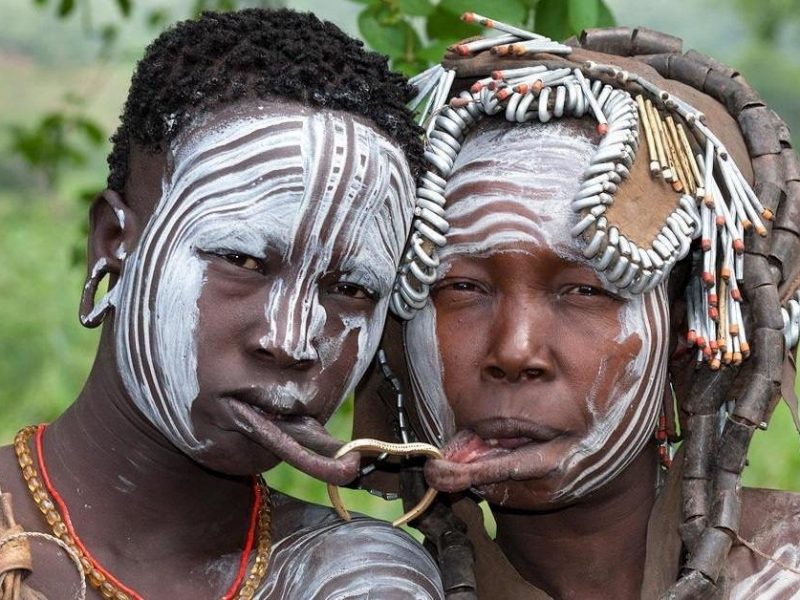
In the afternoon we will drive to the Mursi tribes which is 83km away from Jinka. Through the Mago national park and the Mursi tribes are known as the most amazing tribes of all, best known for the lip plates worn by the women. The custom is that when a Mursi woman reaches the age of about 20, a slit is cut beneath her lower lip, creating a small hole between the lip and the tissue below. Over the next year, this gap is progressively stretched, forming a ‘lip loop’ large enough for a small circular clay plate, indented like a pulley, to be inserted between the lip and the mouth.
Overnight camping with the Mursi people.
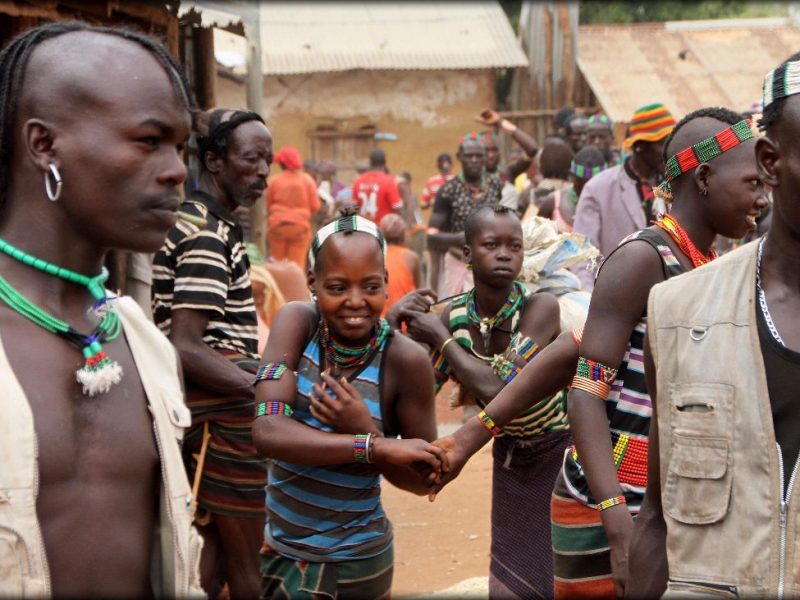
We break camp, after an early morning visit to the Mursi, drive to Turmi and on the way to Turmi, we will attend Saturday weekly market of the Hamar tribe.
After the market if there is a chance of a Hamar bull jumping ceremony we will attend the ceremony.
The Hamar women have high cheek bones, wear thick copper/metal necklaces, elaborate beads, goat-skins and their hair is often coloured with red ochre and butter. The men often use coloured clay on their hair and take real pride in their appearance and culture. Like all the tribes, they are very photogenic.
Overnight Camping Hamar Village
An early morning 5:30 am we drive to Kara Village but along the way we will visit and do a photo shooting at Nyangatom Tribal village , who are said to be descendants of the Toposa tribe in South Sudan.
Here, we will have opportunities to photograph the tribe, who live in a climatically challenging area of the Omo (very arid). The women wear numerous strands of beads, which they build upon during life.
Tribal adornment is an integral part of their culture. The area is semi arid and water has to be collected from rivers each day.
Lunch boxes are provided to create time to photograph the villages with sunrises.
After our visit at Nyangatom then we will proceed drive to Kara Dus.
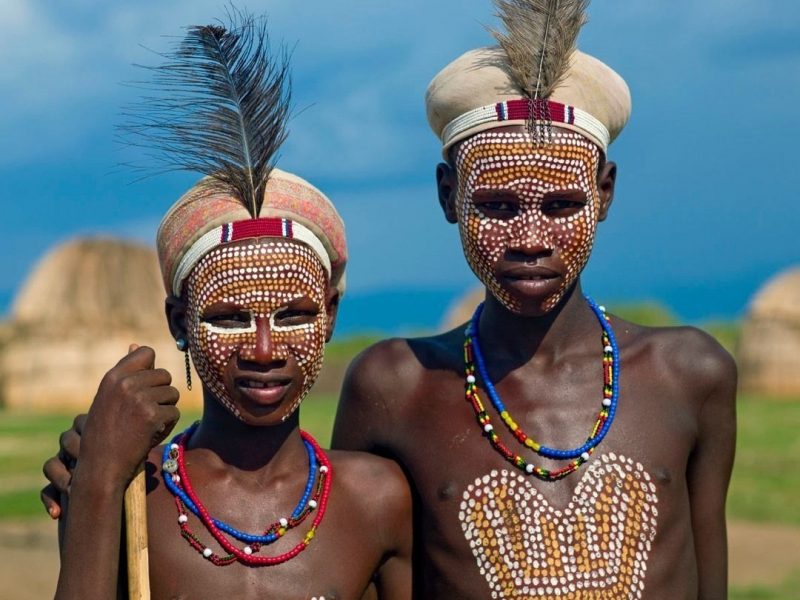
Dus is the second of three village settlements of the Kara tribe. Sited on the banks of the Omo River, the Kara known for their creative and decorative body chalk painting. Many of the Kara women have pierced lips and insert nails, flowers and pins. In addition to various photographic opportunities in the village and on the banks of the Omo River, we may be able to photograph the ceremonial, communal dance performed by the people of Dus.. This is dusty and very atmospheric – photo opportunities abound.
The Kara of Dus pride themselves as the best dancers in the Omo.
Overnight camping at Dus Village
the morning drive to Dassench village around Lake Turkana: this tribe lives just north of Kenya's Lake Turkana. Their neighboring tribe is the Turkana people. The Daasanech are pastralists (cattle herders), but due to the harsh territory, they have moved south to grow crops and fish. Cattle are used by the tribesman for meat, milk and clothing.
Overnight Camping on Lake Turkana
This day, you will take the morning flight to Jinka . It’s the largest city in the area and the getaway to Omo Valley.
The team will meet you in the airport and drive to local restaurant to have lunch.
In the afternoon we will drive to the Mursi tribes which is 83km away from Jinka. Through the Mago national park and the Mursi tribes are known as the most amazing tribes of all, best known for the lip plates worn by the women. The custom is that when a Mursi woman reaches the age of about 20, a slit is cut beneath her lower lip, creating a small hole between the lip and the tissue below. Over the next year, this gap is progressively stretched, forming a ‘lip loop’ large enough for a small circular clay plate, indented like a pulley, to be inserted between the lip and the mouth.
Overnight camping with the Mursi people.
We break camp, after an early morning visit to the Mursi, drive to Turmi and on the way to Turmi, we will attend Saturday weekly market of the Hamar tribe.
After the market if there is a chance of a Hamar bull jumping ceremony we will attend the ceremony.
The Hamar women have high cheek bones, wear thick copper/metal necklaces, elaborate beads, goat-skins and their hair is often coloured with red ochre and butter. The men often use coloured clay on their hair and take real pride in their appearance and culture. Like all the tribes, they are very photogenic.
Overnight Camping Hamar Village
An early morning 5:30 am we drive to Kara Village but along the way we will visit and do a photo shooting at Nyangatom Tribal village , who are said to be descendants of the Toposa tribe in South Sudan.
Here, we will have opportunities to photograph the tribe, who live in a climatically challenging area of the Omo (very arid). The women wear numerous strands of beads, which they build upon during life.
Tribal adornment is an integral part of their culture. The area is semi arid and water has to be collected from rivers each day.
Lunch boxes are provided to create time to photograph the villages with sunrises.
After our visit at Nyangatom then we will proceed drive to Kara Dus.
Dus is the second of three village settlements of the Kara tribe. Sited on the banks of the Omo River, the Kara known for their creative and decorative body chalk painting. Many of the Kara women have pierced lips and insert nails, flowers and pins. In addition to various photographic opportunities in the village and on the banks of the Omo River, we may be able to photograph the ceremonial, communal dance performed by the people of Dus.. This is dusty and very atmospheric – photo opportunities abound.
The Kara of Dus pride themselves as the best dancers in the Omo.
Overnight camping at Dus Village
the morning drive to Dassench village around Lake Turkana: this tribe lives just north of Kenya's Lake Turkana. Their neighboring tribe is the Turkana people. The Daasanech are pastralists (cattle herders), but due to the harsh territory, they have moved south to grow crops and fish. Cattle are used by the tribesman for meat, milk and clothing.
Overnight Camping on Lake Turkana
Ar" means bull and "bore" means land. Welcome in Arbore, 'land of the bulls' The cattle is the pride of the people but they are also well know for their farming skills. Specialized in growing sorghum of which they identify many varieties. Although they share lots in common with their neighbors, their looks are quite.
The Arbore women are absolutely stunning, with extremely dark skin and strong features.
Prior to marriage the women have their heads shaved. They wear dark robes, colorful beads and their huts are constructed of tree branches and reeds.
Camping Arbore village
In the morning you will photograph the morning life’s of the tribe.
Afterward, proceed driving to Arbaminch.
However ,in eroute Afterward, you will drive further down to Konso where you will meet one of the famous and the most hard working Konso people in Africa.
Then, as soon as you get in to Konso, you proceed driving to one of the most interesting stone walled village of the Konso People called Gamole.
The Konso people live in an isolated region of the basalt hills. The area is made up of hard rocky slopes. And their villages are fortified by stone walls used as a defensive measure and this has registered on UNESCO world heritage site on 2011.
Afterward driveing to Dorze for over night.
The Dorze people are known for their tall beehive-like houses and their fine cotton weaving. You will photograph the village and learn about the daily lives of these industrious people.
Overnight in Dorze lodges.
In Morning at 6:30 we walk to Dorze Village to photograph the morning life. We will spend 2 hours of visiting the village.
Afterward drive to Arbaminch for boat trip to visit hippo and crocodile in 3rd biggest lake in Ethiopia called Chamo. Then we will spend 2hours visiting the lake.
Around 12:30 we will have lunch and drive 10 minutes to the airport and fly to Addis Ababa.
Overnight Addis Ababa
After breakfast late in the morning at 10:00 we will drive to Natural History museum, it will take 40 minutes.
Afterward drive to Merkato the largest open-air market in Africa. We will spend here 5 hours photographing the market. This market is Amazing for streets photography.
Afterwards , we will have a farewell dinner at one of the famous cultural restaurant called Yod Abbyssinia that is found nearby the airport, then drop you back to the airport.
End of Tour.
We seek the beauty of landscape and seascape, the heritage of cultural diversity, and the bustle of streets and marketplaces. Effectively, photography through geography.
Jinka,Ethiopia
+251 96 857 4834
info@ethiopiantribalexpeditions.com