We seek the beauty of landscape and seascape, the heritage of cultural diversity and the bustle of street and marketplaces. Effectively, photography through geography.

Today is set aside as an arrival day in the wonderous land of Abyssinia. After arrival in Bole International Airport and taking care of passport control and luggage formalities, you will be met by our representative outside the departures hall and driven to your hotel nearby. Here you will be met by your tour leader, and tonight we will have the opportunity to discuss our exciting adventure together in more detail.
The largest city in southwestern Ethiopia, It used to be the capital of the former Kaffa Province, and it is this region which is recognized as the home of the plant Coffea arabica, or coffee. After lunch proceed driving to Mizan Teferi. The scenery on this drive is made up of a mosaic of forest and cultivated land dominated by coffee, tea and various spices, and we will have ample opportunity to stop and take advantage of any photographic opportunities we may encounter.
Overnight: Mizan Salaysh Hotel
This morning is an exciting travel day as we head deep into the little-visited portion of southwestern Ethiopia. En route we pass through Bebeka coffee plantation (located about 30km outside Mizan), which is the largest and oldest coffee plantation in Ethiopia.
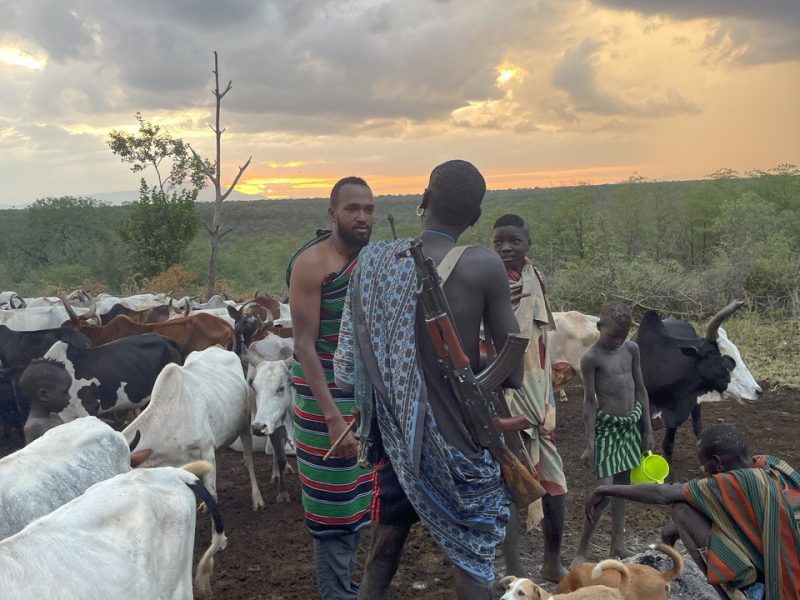
After passing through the town of Tulgit, will finally arrive in Kibish, where we will be camping for the next three nights. Much of our focus today will be photographing the fabulous Suri people, who due to their remoteness are one of the least visited of the Omo Valley’s tribes.
The Suri are pastoralists, placing much value on their cattle, which they protect vigorously against theft from neighbouring tribes. The Surma however also steal livestock from their enemies, and in recent times there has been more pressure on their grazing lands due to input of people from adjacent Sudan who have been displaced by civil war, resulting in not-infrequent fighting in the area.
The Suri people do not make woodcarvings, statues etc., and instead are renowned for their incredibly ornate decoration of themselves, which they achieve through painting, scarification and adornment with flowers and other natural objects. The paintings are dynamic artworks, which vary greatly in design and are truly fascinating to photograph!
Virtually no area of the body is left out, and nakedness is a standard and acceptable part of daily life for the Surma, who regard Westerners concept of clothing with fascination!
Possibly more famously, Suri women, like Mursi women, wear lip plates. In her early 13 -15th ,an unmarried woman’s lower lip will be pierced and then progressively stretched over the period of a year. A clay disc, which has its edge indented like a pulley wheel, is squeezed into the hole in the lip. As the lip stretches, a succession of ever-larger discs are forced in until the lip, now a loop, is so long it can sometimes be pulled right over the owner’s head! The size of the lip plate determines the bride price with a large one bringing in fifty head of cattle. Suri women make the lip plates from clay, colouring them with ochre and charcoal and baking them in a fire.
Overnight: camping at Kibush
We have two full days to explore and photograph the fascinating Suri, making the most of our time in this remote region of Ethiopia.
Another famous component of Suri life is stick fighting, known a Donga. We will be exceptionally fortunate to witness such a contest, but our local guide will keep an ear to the ground and with luck, we may be able to attend such an event. At a fight, each male contestt is armed with a hardwood pole about six feet long and with a weight of just less than two pounds.
The men paint their bodies with a mixture of chalk and water before the fight. In the attacking position, this pole is gripped at its base with both hands, the left above the right in order to give maximum swing and leverage. Each player beats his opponent with his stick as many times as possible with the intention of knocking him down, and eliminating him from the game. Players are usually unmarried men.
The winner is carried away on a platform of poles to a group of girls waiting at the side of the arena who decide among themselves which of them will ask for his hand in marriage. Taking part in a stick fight is considered to be more important than winning it.
Overnight: camping at Kibish
An early morning 5:am we drive to Kara Village via Kakuta (10 hrs drive), but along the way we will visit and do a photo shooting at Nyangatom Tribal village , who are said to be descendants of the Toposa tribe in South Sudan.
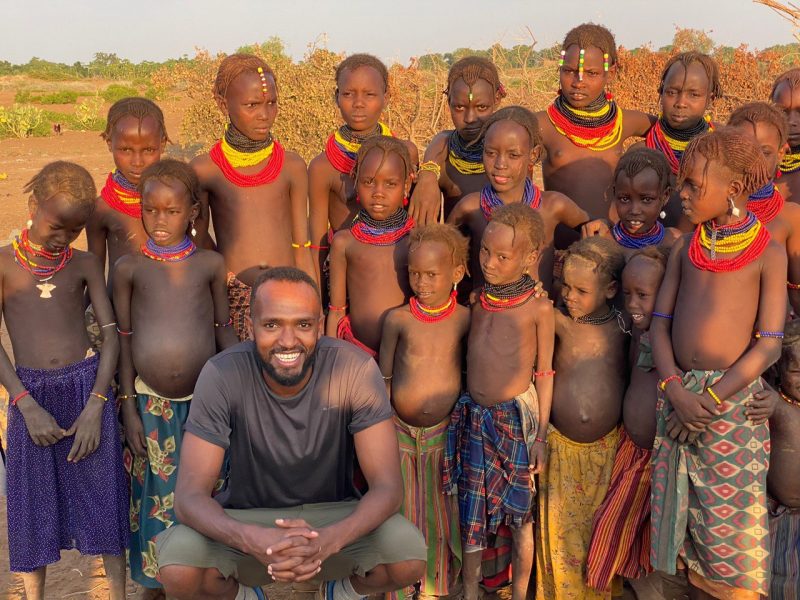
Here, we will have opportunities to photograph the tribe, who live in a climatically challenging area of the Omo (very arid). The women wear numerous strands of beads, which they build upon during life.
Tribal adornment is an integral part of their culture. The area is semi arid and water has to be collected from rivers each day. Camp overnight in Kakuta. 105kms / 3 hours driving. Lunch boxes are provided to create time to photograph in the villages.
After our visit at Nyangatom then we will proceed drive to Kara Dus.
Overnight: camping at Dus Village.
Today is set aside as an arrival day in the wonderous land of Abyssinia. After arrival in Bole International Airport and taking care of passport control and luggage formalities, you will be met by our representative outside the departures hall and driven to your hotel nearby. Here you will be met by your tour leader, and tonight we will have the opportunity to discuss our exciting adventure together in more detail.
The largest city in southwestern Ethiopia, It used to be the capital of the former Kaffa Province, and it is this region which is recognized as the home of the plant Coffea arabica, or coffee. After lunch proceed driving to Mizan Teferi. The scenery on this drive is made up of a mosaic of forest and cultivated land dominated by coffee, tea and various spices, and we will have ample opportunity to stop and take advantage of any photographic opportunities we may encounter.
Overnight: Mizan Salaysh Hotel
This morning is an exciting travel day as we head deep into the little-visited portion of southwestern Ethiopia. En route we pass through Bebeka coffee plantation (located about 30km outside Mizan), which is the largest and oldest coffee plantation in Ethiopia.
After passing through the town of Tulgit, will finally arrive in Kibish, where we will be camping for the next three nights. Much of our focus today will be photographing the fabulous Suri people, who due to their remoteness are one of the least visited of the Omo Valley’s tribes.
The Suri are pastoralists, placing much value on their cattle, which they protect vigorously against theft from neighbouring tribes. The Surma however also steal livestock from their enemies, and in recent times there has been more pressure on their grazing lands due to input of people from adjacent Sudan who have been displaced by civil war, resulting in not-infrequent fighting in the area.
The Suri people do not make woodcarvings, statues etc., and instead are renowned for their incredibly ornate decoration of themselves, which they achieve through painting, scarification and adornment with flowers and other natural objects. The paintings are dynamic artworks, which vary greatly in design and are truly fascinating to photograph!
Virtually no area of the body is left out, and nakedness is a standard and acceptable part of daily life for the Surma, who regard Westerners concept of clothing with fascination!
Possibly more famously, Suri women, like Mursi women, wear lip plates. In her early 13 -15th ,an unmarried woman’s lower lip will be pierced and then progressively stretched over the period of a year. A clay disc, which has its edge indented like a pulley wheel, is squeezed into the hole in the lip. As the lip stretches, a succession of ever-larger discs are forced in until the lip, now a loop, is so long it can sometimes be pulled right over the owner’s head! The size of the lip plate determines the bride price with a large one bringing in fifty head of cattle. Suri women make the lip plates from clay, colouring them with ochre and charcoal and baking them in a fire.
Overnight: camping at Kibush
We have two full days to explore and photograph the fascinating Suri, making the most of our time in this remote region of Ethiopia.
Another famous component of Suri life is stick fighting, known a Donga. We will be exceptionally fortunate to witness such a contest, but our local guide will keep an ear to the ground and with luck, we may be able to attend such an event. At a fight, each male contestt is armed with a hardwood pole about six feet long and with a weight of just less than two pounds.
The men paint their bodies with a mixture of chalk and water before the fight. In the attacking position, this pole is gripped at its base with both hands, the left above the right in order to give maximum swing and leverage. Each player beats his opponent with his stick as many times as possible with the intention of knocking him down, and eliminating him from the game. Players are usually unmarried men.
The winner is carried away on a platform of poles to a group of girls waiting at the side of the arena who decide among themselves which of them will ask for his hand in marriage. Taking part in a stick fight is considered to be more important than winning it.
Overnight: camping at Kibish
An early morning 5:am we drive to Kara Village via Kakuta (10 hrs drive), but along the way we will visit and do a photo shooting at Nyangatom Tribal village , who are said to be descendants of the Toposa tribe in South Sudan.
Here, we will have opportunities to photograph the tribe, who live in a climatically challenging area of the Omo (very arid). The women wear numerous strands of beads, which they build upon during life.
Tribal adornment is an integral part of their culture. The area is semi arid and water has to be collected from rivers each day. Camp overnight in Kakuta. 105kms / 3 hours driving. Lunch boxes are provided to create time to photograph in the villages.
After our visit at Nyangatom then we will proceed drive to Kara Dus.
Overnight: camping at Dus Village.
After early breakfast, start our day visiting the kara people with the mooring light. Dus is the second of three village settlements of the Kara tribe. Sited on the banks of the Omo River, the Kara known for their creative and decorative body chalk painting. Many of the Kara women have pierced lips and insert nails, flowers and pins. In addition to various photographic opportunities in the village and on the banks of the Omo River, we may be able to photograph the ceremonial, communal dance performed by the people of Dus.. This is dusty and very atmospheric – photo opportunities abound.
The Kara of Dus pride themselves as the best dancers in the Omo. Afterward, in the evening we will drive to Turmi.
Overnight: camping at Dus Village
We break camp, after an early morning visit to the Kara, and proceed to Turmi in the Eastern or Southern Omo. Visit Turmi market but if there is a chance of a Hamar bull jumping ceremony our itinerary will change. The Hamar women have high cheek bones, wear thick copper/metal necklaces, elaborate beads, goat-skins and their hair is often coloured with red ochre and butter. The men often use coloured clay on their hair and take real pride in their appearance and culture. Like all the tribes, they are very photogenic.
Overnight: at Buska Lodge
We drive to Omorate to visit a remote Dassanech village, close to the Kenyan border. Here, we visit their villages and photograph daily life. This is an arid area with very fine silt soils deposited by the Omo river in the past. After our visit to the Dassanech we go to Dimeka market and in the late afternoon we proceed back to Turmi, perhaps stopping at a Hamar village to get the best of the light in the golden hour.
Overnight: in Buska Lodge
We depart at 5.30am from Turmi, heading to Arbore located at the northern edge of Mount Buska. The Arbore women are absolutely stunning, with extremely dark skin and strong features.
Prior to marriage the women have their heads shaved. They wear dark robes, colorful beads and their huts are constructed of tree branches and reeds.
Overnight camping
After early breakfast, start our visit the morning life of Arbore people , with the sunrise light.
Then proceed to Jinka for overnight.
In late afternoon drive from Jinka to Mursi Village though Mago National Park in order to visit the Mursi tribe who settled inside the Mago National Park,
Then after the Mursi visit, we will drive back to Jinka
Overnight Jinka Resort.
After breakfast This day, you will take the morning flight to Addis Ababa.
In the afternoon ,we will embark on an Addis city tour. Places that we will visit include the Natural History Museum, which houses a replica of Lucy (in Ethiopia, known by her Amharic name of “Dinknesh” – you are wonderful). We will also visit the Merkato, the largest open-air market in Africa.
Afterwards , we will have a farewell dinner at one of the famous cultural restaurant called Yod Abbyssinia, then drop you back to the airport.
End of Tour.
We seek the beauty of landscape and seascape, the heritage of cultural diversity, and the bustle of streets and marketplaces. Effectively, photography through geography.
Jinka,Ethiopia
+251 96 857 4834
info@ethiopiantribalexpeditions.com